Introduction
Global plastic waste pollution has evolved into one of the planet’s most urgent ecological challenges. Each year, hundreds of millions of tons of discarded plastic film, rigid containers, non-woven scraps and packaging waste end up in landfills, rivers and oceans, inflicting permanent damage on soil, aquatic habitats and marine life. To resolve this widespread pollution crisis, integrated plastic waste recovery systems serve as a practical industrial solution, relying on two core processing units to convert messy, low-value plastic scraps into uniform reusable pellets. This complete set of processing equipment delivers obvious ecological benefits, while small-scale pollution risks generated during operation can be fully eliminated via matched environmental protection accessories. This text covers both the eco-friendly value and manageable side effects of plastic waste reprocessing, alongside targeted pollution treatment solutions for production workshops.
1. Major Positive Environmental Values of Plastic Waste Reprocessing Equipment
1.1 Mitigate white pollution and reduce landfill occupation
Common PP, PE and PET plastics take 200 to 500 years to degrade naturally. Without professional reprocessing hardware, most discarded plastic goods will be buried or incinerated. Buried plastic wastes occupy large land areas, block soil air circulation and water penetration, and leach toxic additives into underground water after years of corrosion. Unprocessed incineration releases dioxin and fine toxic particles, contaminating air and threatening human respiratory health.
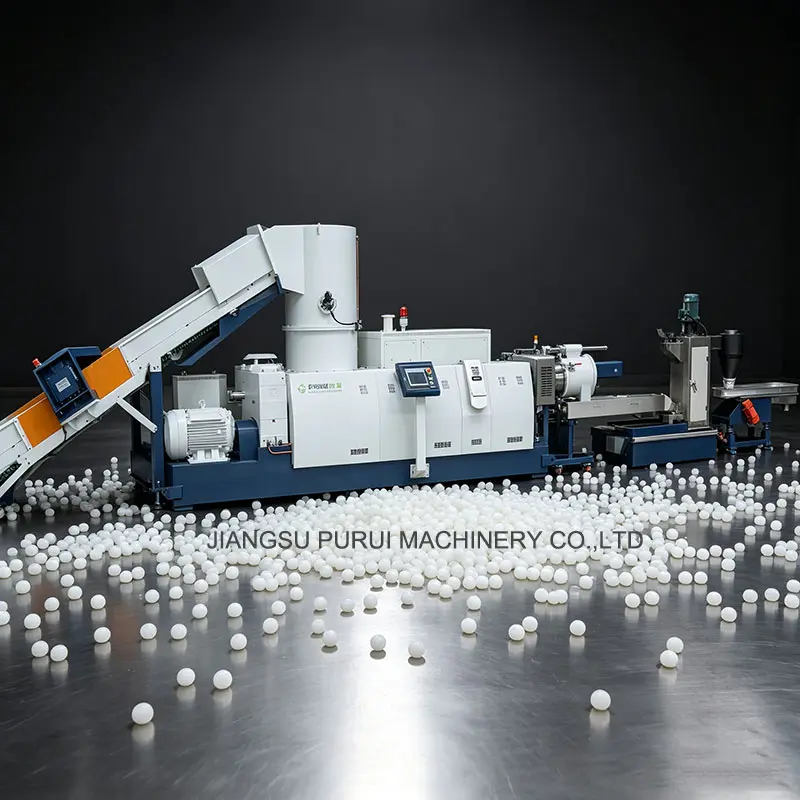
A standard plastic waste recovery station equipped with a plastic granulator can cut scrap plastic volume by more than 75% after crushing and squeezing. Medium-sized production units process 300–800 kg waste plastic hourly, turning disordered scraps into standardized industrial raw materials and drastically cutting waste delivery to landfills and incinerators. For hard-to-degrade materials such as agricultural mulch film, woven bags and waste optical BOPET film, a complete waste plastic recycling line remains the most effective method to avoid long-term ecological damage.
1.2 Reduce crude oil consumption and cut industrial carbon emissions
New plastic raw materials are refined from crude oil, and the full petrochemical chain including oil extraction, cracking and polymerization creates massive carbon footprints. Industry data shows one ton of virgin plastic particles consumes roughly 3.8 tons of crude oil and discharges massive carbon dioxide. Recycled pellets produced by a plastic pelletizing machine within formal recovery workshops can replace virgin plastic in injection molding, film blowing, non-woven production and plastic pipe manufacturing.
Each ton of recycled plastic pellets cuts crude oil use by nearly 4 tons and lowers carbon emissions by over 60% compared with new plastic production. Wide adoption of such recovery systems slows excessive petroleum exploitation and helps enterprises and countries achieve carbon neutrality targets, pushing low-carbon transformation across the whole plastic industry. Stable performance from a plastic granulator ensures large-scale waste plastic reuse and forms the core capacity of a mature waste plastic recycling line.
1.3 Build closed-loop circular economy through integrated recovery workflows
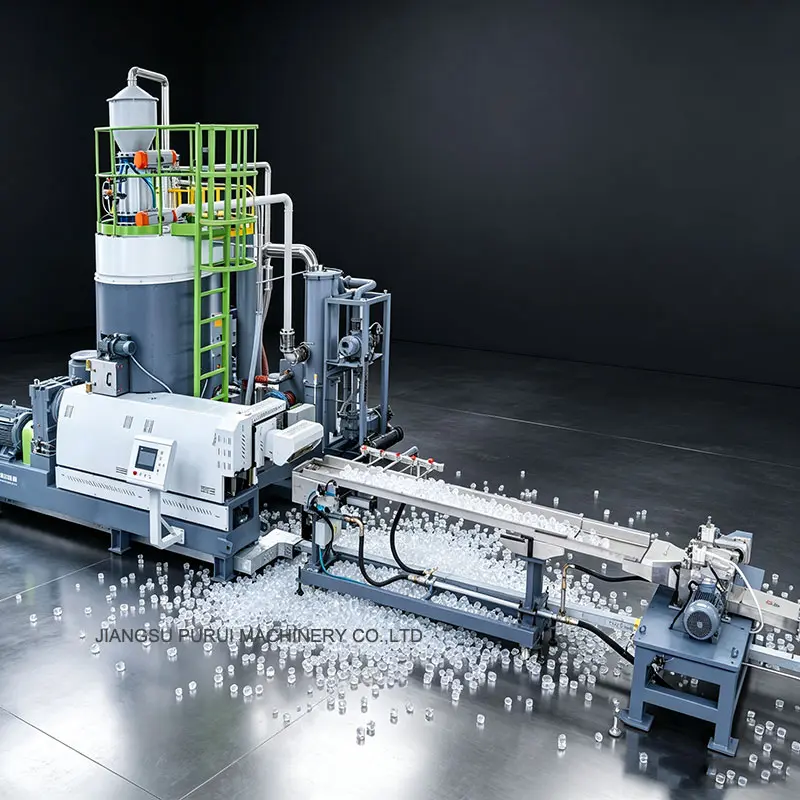
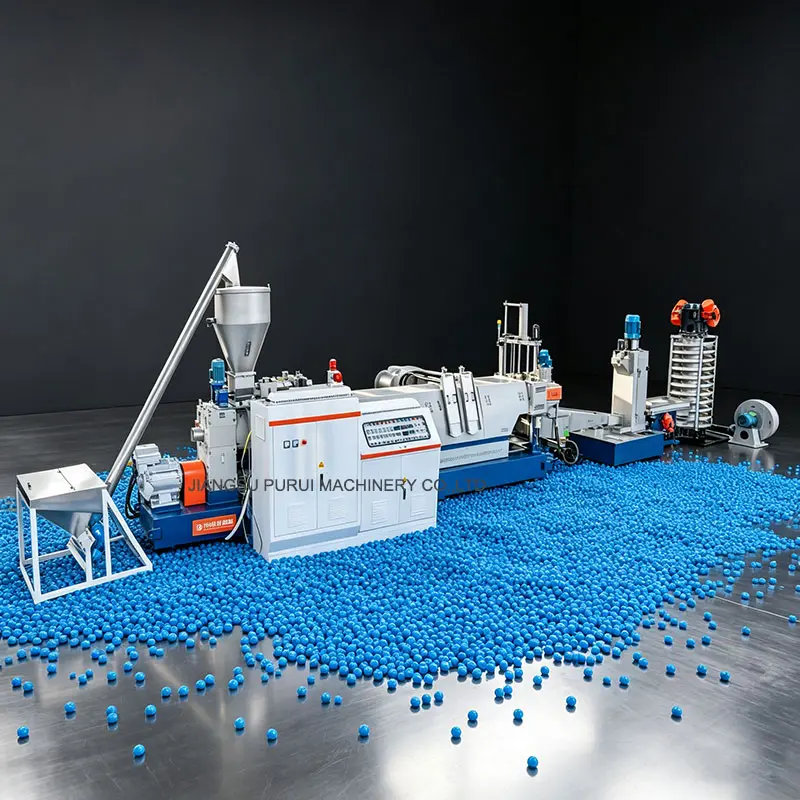
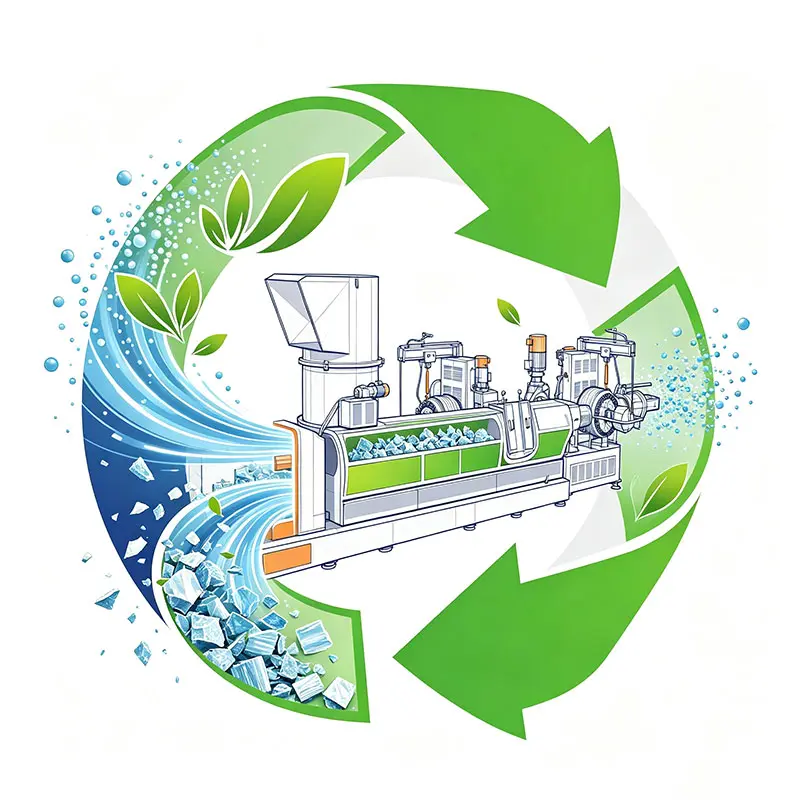
Single processing hardware cannot finish full plastic waste treatment independently; only a matched waste plastic recycling line combining multiple devices forms a full-cycle recovery system paired with cleaning tanks, dewatering machines, fume purifiers and circulating water facilities. Plastic waste collected from factories, farms and recycling stations first enters the cleaning segment to strip mud, ink residues, food residues and heavy metal pollutants. After thorough dehydration, clean plastic fragments are sent into a plastic granulator for primary melting extrusion, then transferred to a precise plastic pelletizing machine for secondary plasticization and strip molding, before being cut into solid pellets by water-ring cutting equipment.
These recycled pellets flow back to plastic product factories as secondary raw materials, creating a closed resource cycle: plastic product-use-waste recovery-recycled pellet-new plastic goods. This sustainable model depends on stable core processing hardware inside every waste plastic recycling line, lowering global demand for disposable virgin plastic, improving utilization efficiency of limited petrochemical resources, and replacing the wasteful linear “produce-discard” industrial mode.
2. Controllable Pollution Risks & Supporting Treatment Solutions
While core processing hardware inside a waste plastic recycling line brings prominent ecological advantages, minor pollutants are created during high-temperature melting, cleaning and continuous mechanical operation. All side effects can be fully controlled with matched environmental supporting equipment.
2.1 Wastewater generated during cleaning and cooling
Pre-waste cleaning and water cooling for extruded strips from plastic granulator and plastic pelletizing machine produce industrial wastewater mixed with printing ink, detergent residues, fine plastic sludge and micro plastic fragments. Direct wastewater discharge pollutes rivers and harms aquatic organisms, weakening the overall environmental advantages of a complete waste plastic recycling line.
Solution: Install sedimentation tanks, multi-layer filter screens and circulating water filtration systems for the whole recovery workflow. After precipitation and filtration, over 90% wastewater can be recycled repeatedly for material cleaning and equipment cooling. Only evaporated water needs regular replenishment, and collected sludge receives centralized harmless disposal without random discharge.
2.2 Volatile waste gas released during thermal melting
When plastic fragments are heated to 180–260℃ inside the screw cavity of plastic granulator and plastic pelletizing machine, residual printing ink, softeners and chemical additives volatilize into gaseous pollutants. Untreated exhaust gas irritates workers’ respiratory tracts and causes slight air pollution within the workshop of a waste plastic recycling line.
Solution: Add multi-stage vacuum exhaust pipelines on both core machines, matched with activated carbon adsorption and spray purification devices for the full recovery workflow. All volatile fumes are absorbed and decomposed before emission, meeting international industrial exhaust discharge standards.
2.3 Mechanical noise during long-time continuous operation
Crushers, screw hosts, cutting assemblies and conveying fans inside a waste plastic recycling line generate constant mechanical noise during round-the-clock production. If the workshop housing plastic granulator and plastic pelletizing machine sits close to residential areas, sustained noise may disturb nearby residents’ daily lives.
Solution: Install customized sound insulation covers and shock absorption pads on the two core machines, plus sound insulation walls around the whole recovery workshop to drop noise below 80 decibels, complying with global industrial noise control regulations.
Conclusion
From an all-round ecological perspective, the environmental benefits brought by plastic granulator, plastic pelletizing machine and matched waste plastic recycling line far exceed their minor controllable pollution risks. As key processing hardware for plastic waste recovery, these two machines form the functional heart of every complete recovery workflow. They effectively relieve global white pollution, save non-renewable crude oil resources, reduce greenhouse gas emissions and advance sustainable circular plastic industry development. All pollutants generated during equipment operation can be fully treated by circulating water systems, exhaust purification devices and sound insulation facilities.
For recycling factories across Europe, Southeast Asia and other global regions, investing in an eco-friendly waste plastic recycling line equipped with stable plastic granulator and high-efficiency plastic pelletizing machine is both a profitable business choice and an important measure to undertake global ecological protection obligations. With continuous upgrades to low-pollution processing technology, the whole plastic waste recovery industry will step steadily into a green, low-carbon circular development era.
According to official industrial reports released by Plastic Europe, standardized plastic waste recovery workflows can cut factory carbon footprints by nearly 60% each year.