PET Fiber Pelletizing Machine | Polyester Textile Fiber Extrusion Pelletizer

Plastic Pelletizing Machine

fiber recycling pelletizing & PET fiber pelletizing machinemachine for PET PP PA textile fiber yarn non-woven fabric
Alternative Names:

Polyester fiber recycling granulator,PET fiber extrusion pelletizer,Polyester fiber regranulation machine,Waste PET fiber pellet making machine,Recycled polyester fiber extruder,Textile fiber pelletizing equipment,Synthetic fiber recycling pellet machine,PET yarn scrap pelletizing machine

Output Capacity Range:100-2000kg/h

Voltage:380V/400V/415V/220V

Screw Type:Single Screw Extruder

Controller:SIEMENS PLC Touch Screen Controller

Motor Brand:SIEMENS/ABB

Plastic Pelletizer Type:Strand pull pelletizer,under-water pelletizer

Polyester Textile Fiber Extrusion Pelletizer for Waste Fiber Recycling Repelletizing

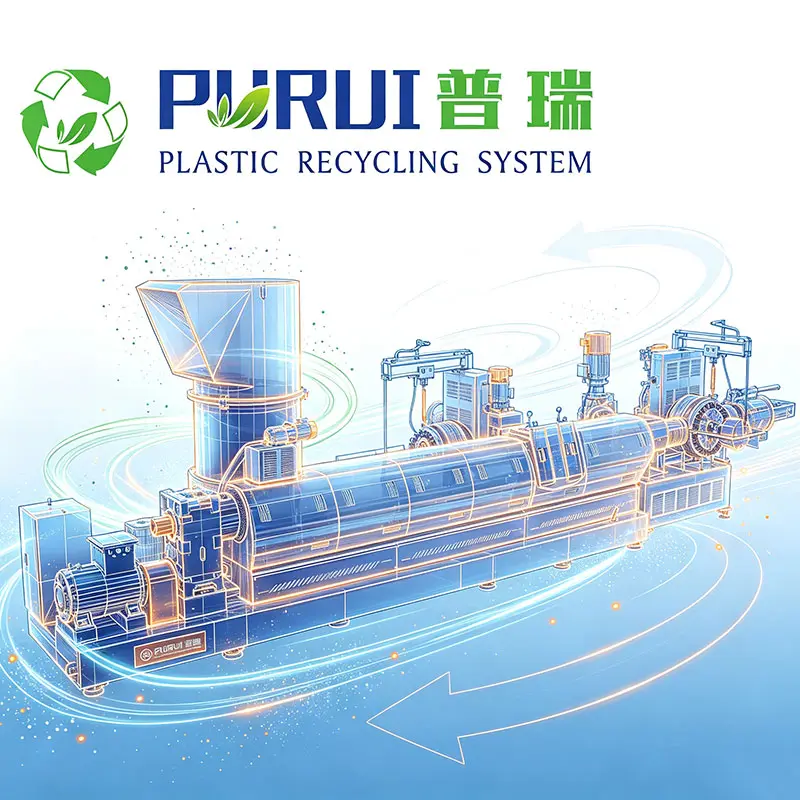
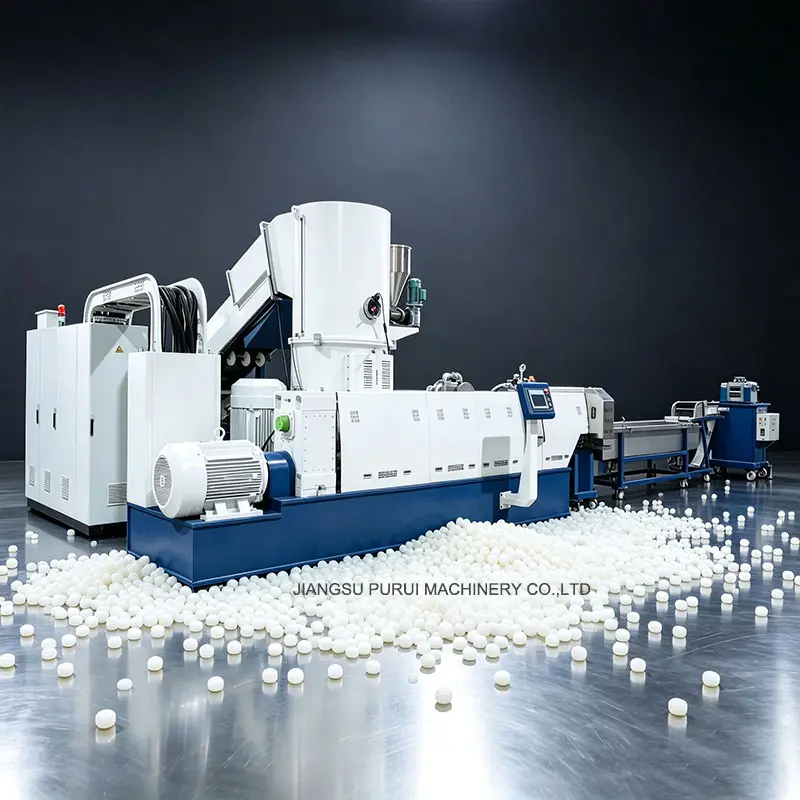
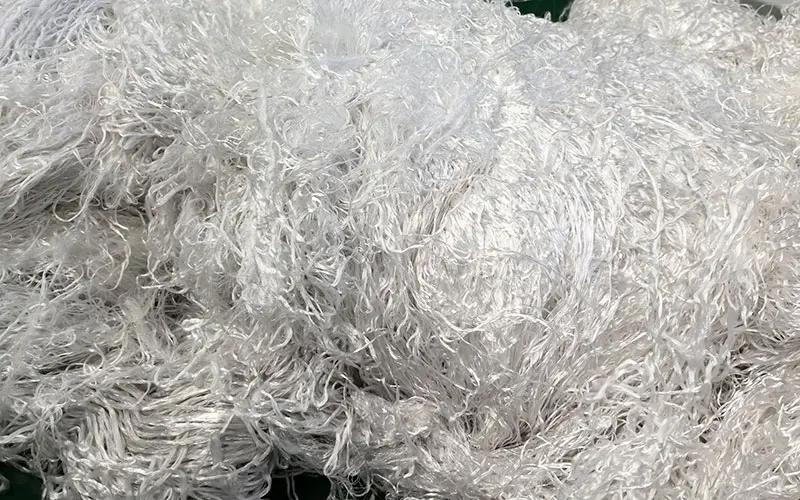
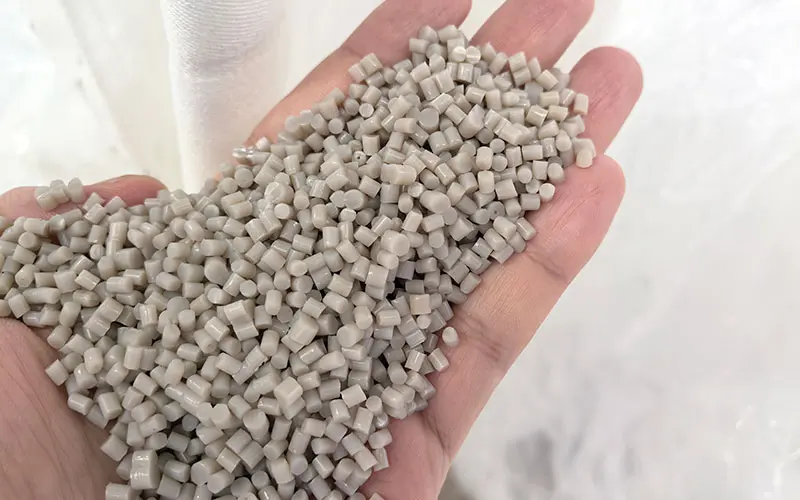
This professional polyester textile fiber extrusion pelletizer is specially developed for post-consumer textile waste recycling, also widely known as reliable waste polyester fiber regranulator in textile recycling industry. Targeting the characteristic that polyester fiber is fluffy, easy winding and prone to hydrolysis during melting, this recycling equipment effectively solves feeding blockage, fiber entanglement and viscosity attenuation problems in traditional extrusion reprocessing, turning messy waste spinning leftovers into uniform recycled plastic pellets with stable performance.
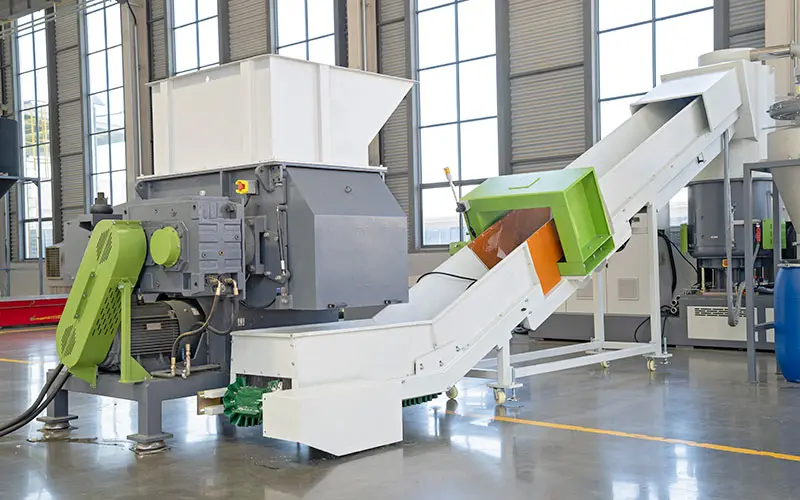
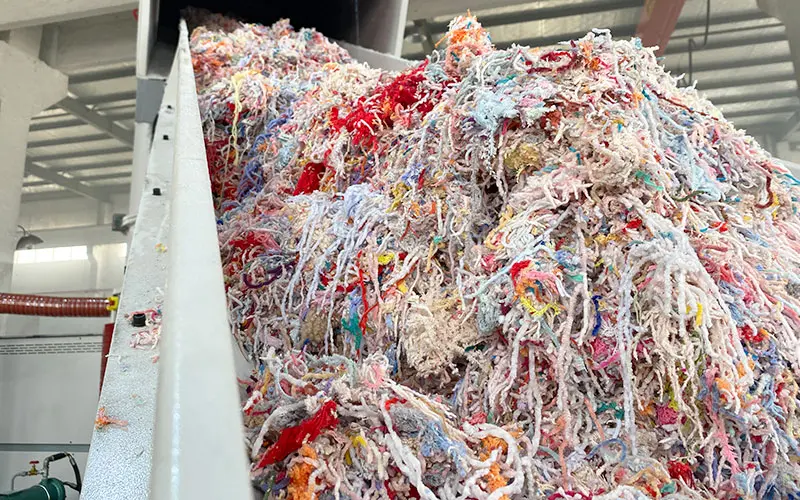
It is perfectly matched with upstream fiber opening, shredding and pre-drying procedures, processing various waste materials including polyester staple fiber leftover, spinning waste yarn, non-woven fabric scraps, old polyester textile clippings and fiber production edge trimmings. As mature recycling equipment, it can work independently or form a full automatic production line to realize continuous regranulation from loose fiber to finished pellets.
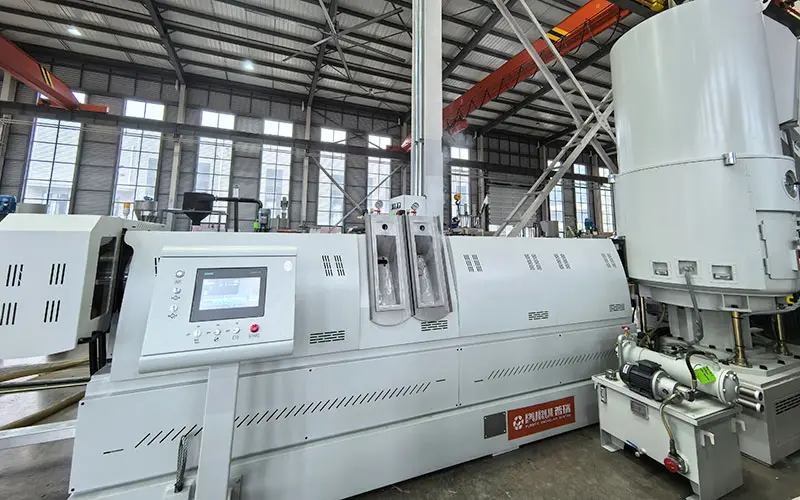
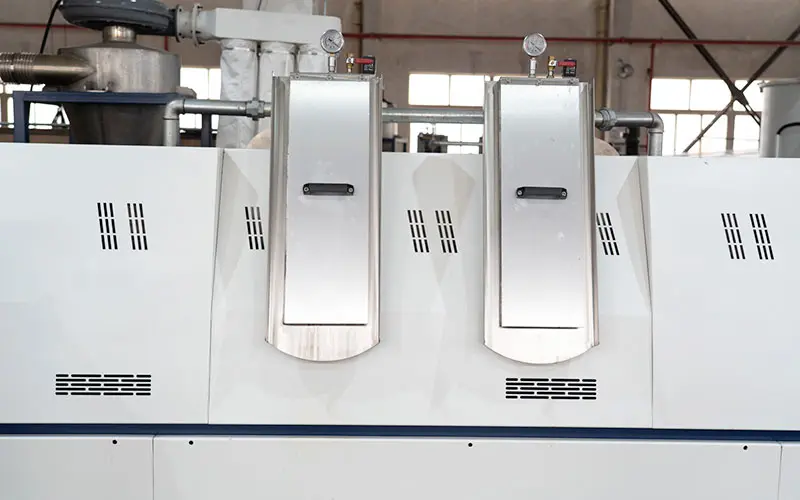
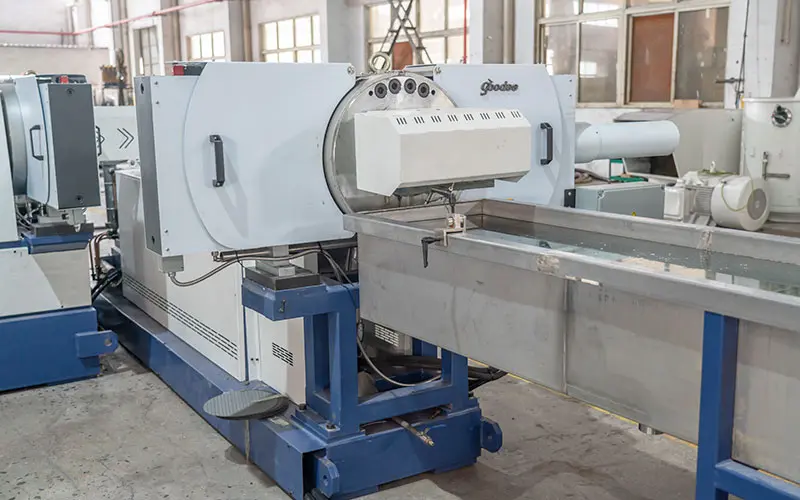
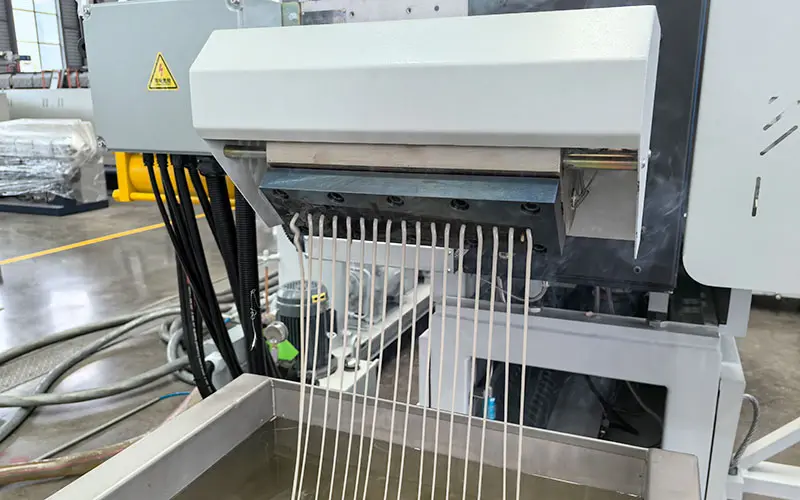
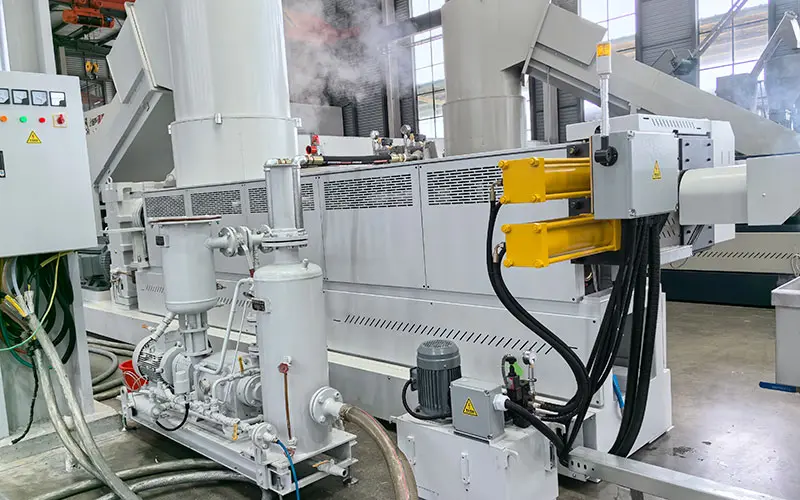
Different from ordinary plastic extruders, this regranulation unit adopts anti-winding forced feeding structure to avoid material bridging and wrapping screw shaft. Multi-stage vacuum devolatilization design removes moisture, volatile monomers and small molecule impurities thoroughly, preventing pellet yellowing, bubbles and poor surface quality caused by polyester hydrolysis. Customers can select strand cutting or water-ring cutting configuration according to fiber cleanliness and production capacity demand to prevent pellet adhesion during discharging.
The whole machine uses wear-resistant nitrided screw and segmented precise temperature control system, supporting long-term stable continuous operation. We customize hourly output from 150kg/h to 1800kg/h to satisfy small recycling workshops and large-scale textile recovery factories. Produced recycled pellets can be reused for fiber spinning, modified plastic injection molding and plastic product manufacturing, realizing circular utilization of textile solid waste.
We supply pre-sales process consultation, site layout design, overseas installation & commissioning, operator training and 12-month whole machine warranty service. This cost-effective recycling unit is ideal choice for enterprises engaging in waste polyester fiber resource regeneration.
fiber-recycling
Textile-fiber-waste-pelletizing-line

Textile waste fiber re-pelletizing extruder Model & Parameter

Model ML75 ML85 ML100 ML130 ML160 ML180
L/D 35:1 33:1 36:1 36:1 33:1 35:1 30:1 33:1
Rotary speed(r/min) 220 220 185 185 150 150 120 120
Capacity(kg/h) 150-200 200-300 400-450 500-650 650-700 800-900 1000 1500

Note: Plastic granulating machines are customized product, any changes in material and motor configuration will affect the output capacity data. Please consult our sales quotation for guidance.

FAQ – Frequently Asked Questions for PET fiber recycling pelletizing line

Q1: What waste materials can this PET fiber pelletizing machine process?

A: This equipment, also known as PET fiber granulating machine and professional waste polyester fiber regranulator, handles polyester spinning waste, staple fiber leftover, non-woven scraps, waste polyester fabric clippings and fiber production edge trimmings. As complete PET fiber recycling machine and matched polyester textile fiber extrusion pelletizer, it converts fluffy textile waste into reusable uniform recycled pellets.

Q2: Why is multi-stage vacuum exhaust necessary for polyester fiber regranulation?

A: Polyester fiber easily absorbs moisture during storage and transportation. If directly extruded without sufficient dehumidification, hydrolysis reaction will occur under high temperature, resulting in decreased pellet viscosity, yellowing and internal bubbles. The multi-stage vacuum exhaust structure on our extruder can thoroughly remove residual moisture and volatile impurities, effectively stabilizing the intrinsic viscosity and surface quality of finished recycled pellets.

Q3: Can I customize production capacity for this fiber recycling equipment?

A: Yes, we offer customized output ranging from 150kg/h to 1800kg/h. Our engineers adjust screw specification, motor power and feeding structure according to your fiber impurity degree, factory space and budget to make targeted solution matching your production scale.

Q4: Is it necessary to equip a pre-drying device before feeding fiber into this extrusion system?

A: It depends on the moisture content of your raw polyester fiber. If the fiber is only naturally air-dried with high residual moisture, we highly recommend configuring a pre-crystallization dryer to stabilize pellet quality. Though our PET fiber pelletizing machine is fitted with multi-stage vacuum exhaust to remove partial moisture, pre-drying can effectively prevent PET hydrolysis, viscosity loss and yellowing issues, protecting long-term stable running of your PET fiber granulating machine, waste polyester fiber regranulator and whole extrusion line.

Q5: Can this unit work independently or must it be matched with a full upstream processing line?

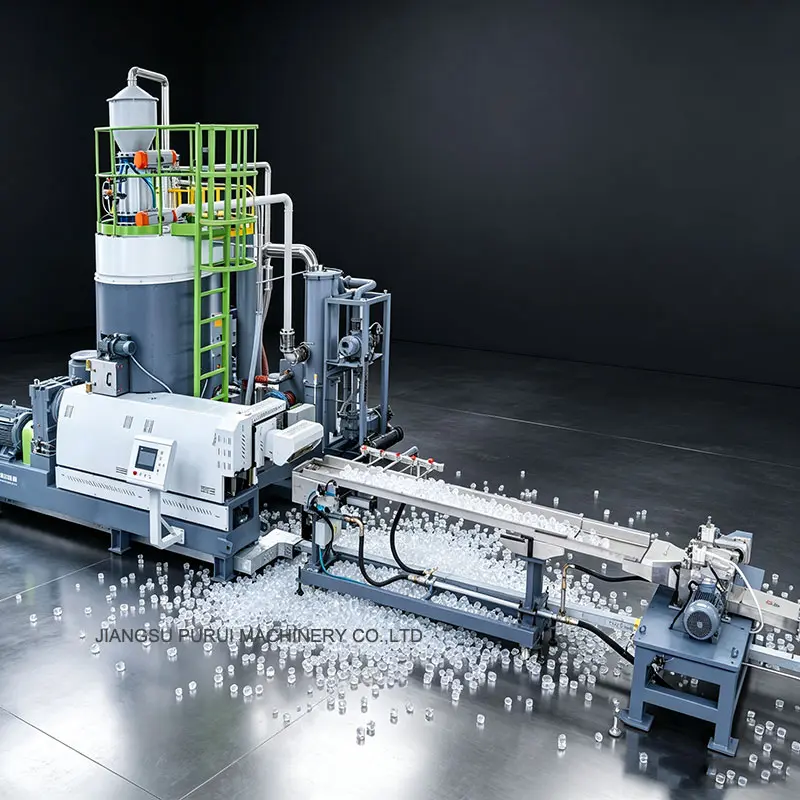
A: Two flexible configuration modes are available for customers’ choice. If you already own fiber opening, shredding and sorting equipment, you can purchase the standalone main host of this PET fiber recycling machine only. If you need a one-stop turnkey project, we can design a complete set of textile waste recycling system including fiber shredder, conveying unit, drying system and our core polyester textile fiber extrusion pelletizer, realizing fully automatic closed-loop reprocessing from waste fiber to finished pellets.

HOT SALE PLASTIC RECYCLING MACHINES

PET bottle granulator, PET bottle pelletizer, PET bottle flakes granulator, PET flake pelletizing machine, waste PET bottle recycling granulator for PET bottle flake extrusion pelletizing

pet bottle flakes granulating line

This PET bottle flakes granulating system processes cleaned recycled polyester bottle chips into high-quality reprocessed pellets for spinning and injection use. Designed with high-torque extrusion configuration, it efficiently eliminates residual moisture, ink volatiles and tiny contaminants left after washing. Equipped with continuous screen filtration and underwater pelletizing option, it stabilizes plasticization and ensures consistent pellet appearance.
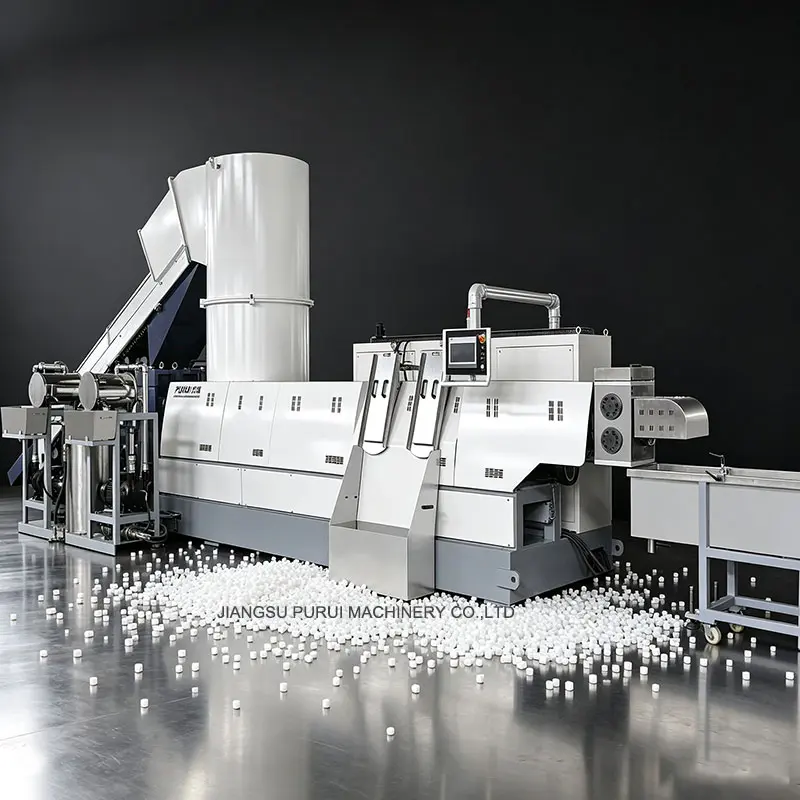
PP PET fabric recycling granulator& Non Woven Fabric Pelletizerpelletizing machine

Non Woven Fabric Pelletizer

This non woven fabric pelletizer is tailored to recycle leftover spunbond, meltblown fabric, edge trims and defective nonwoven rolls. Outfitted with a specially anti-winding screw and integrated compactor, it solves bridging and tangling problems caused by fluffy light textiles effectively. Dual vacuum channels remove spinning oil and residual moisture to boost pellet purity. Hydraulic continuous screen changing filters lint and impurities steadily.
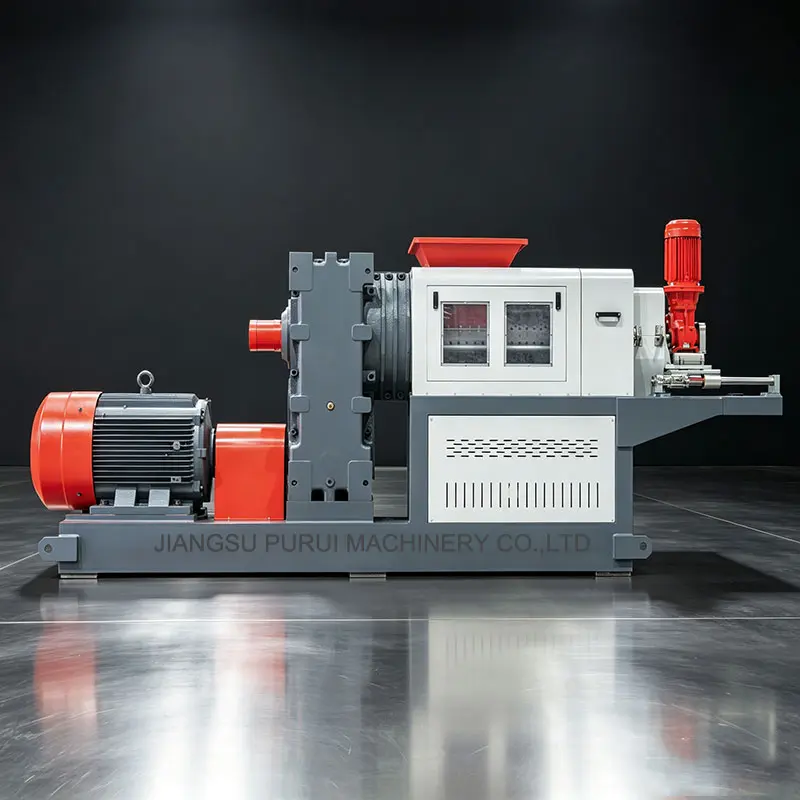
Squeezing Dryer | Plastic Squeezer Machine

Plastic Squeezer dryer

This plastic squeezer dryer, also known as screw press dewatering machine, is specially designed for wet PE and PP film, woven bags and plastic bag scraps after washing line. It adopts high-pressure screw extrusion to squeeze out excessive water, reducing material moisture from 25%-35% down to 3%-5%.Easy to operate and maintain, it has become essential pretreatment equipment matched with plastic film washing and granulating lines.